




What are Flexible Printed Circuit Boards?
Flexible PCBs, also known as flex PCBs or flexible circuit boards, are printed circuit boards manufactured using flexible materials that allow the circuit to bend and adapt to different shapes.
This flexibility makes them particularly suited to compact electronic devices and applications where space, weight and mechanical movement are important design considerations. Typical applications include smartphones, laptops, smartwatches, hard drives and automotive electronics.
Unlike a conventional rigid PCB, which is designed to maintain a fixed form, a flexible PCB can be shaped to fit within compact or mechanically complex assemblies.
Flexible PCBs are typically manufactured using thin polyimide materials, providing greater design freedom than conventional rigid PCB materials.
Their reduced thickness and PCB volume can also provide significant weight savings, which is one of the reasons Flexible PCBs are widely used in aviation and space applications.

Types of Flexible PCBs
Flexible PCBs can be manufactured as single-sided, double-sided or multilayer structures.
According to IPC-6013, the main Flexible PCB types are:
- IPC-6013 Type 1 – Single-sided
- IPC-6013 Type 2 – Double-sided
- IPC-6013 Type 3 – Multilayer
Stiffeners can be incorporated where local rigidity is required. Double-sided and multilayer Flexible PCBs can also use plated through holes (PTHs) to create electrical connections between layers.
The ability to bend, twist and form the circuit allows Flexible PCBs to support compact designs while reducing the need for conventional wiring and connectors.

What Are Rigid-Flex Printed Circuit Boards?
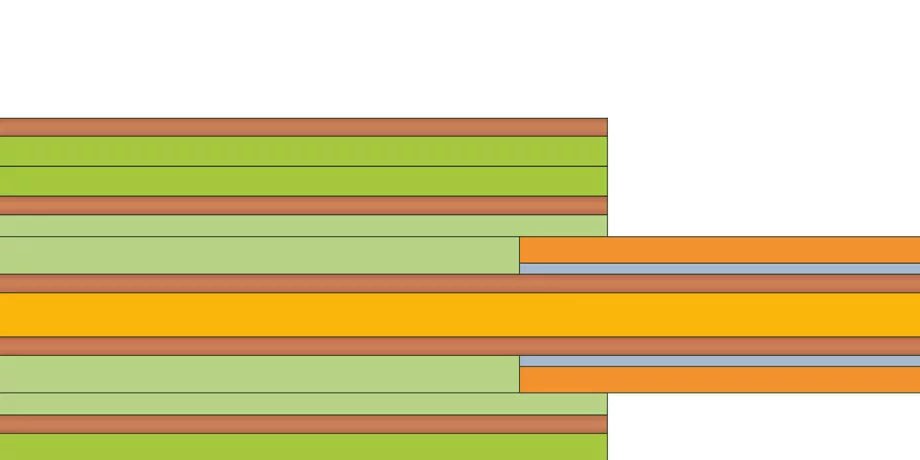
A Rigid-Flex PCB combines rigid PCB sections with flexible circuit areas within a single integrated printed circuit board.
This hybrid construction combines the mechanical stability of rigid PCBs with the flexibility of flex circuits, allowing complex electronic assemblies to be integrated into a more compact design.
Rigid sections are used where mechanical stability is required, while flexible sections provide the interconnections between them and allow the PCB to bend where necessary.
Rigid-Flex PCBs can use plated through holes to create electrical connections between layers and can also incorporate other PCB technologies, including HDI, where required by the design.
Rigid-Flex PCB technology can reduce or eliminate the need for separate flexible cables and wiring harnesses, helping simplify assembly and reduce the number of individual interconnections.
Typical applications include aviation, aerospace, automotive and test equipment.
Fineline Global can also provide semi-flex PCB technology solutions.
Flexible vs Rigid-Flex PCB Technology
Flexible and Rigid-Flex PCBs address different mechanical and electrical requirements.
A Flexible PCB is primarily based on flexible circuit materials and is designed to bend or conform to the available space. A Rigid-Flex PCB combines flexible areas with rigid sections to create a single integrated PCB construction.
The most appropriate solution depends on factors including available space, mechanical movement, component placement, interconnection requirements and the complexity of the final assembly.
Find the Right Solution for Your Application
Every application has its own technical, performance and production requirements. Our experts can help you identify the most suitable technology, materials and configuration for your project.