





Metal Core PCBs, Coins in different versions and consulting and design support in the field of thermal management
Fineline Global provides a range of thermal management PCB technologies designed to support effective heat dissipation in applications where thermal performance, power density and reliability are critical.
Our thermal management PCB solutions include Metal Core PCBs (MCPCBs), Coin PCBs and Heavy Copper PCBs, providing different approaches to managing heat and increased current requirements according to the design and application.
Metal Core PCB – MCPCB
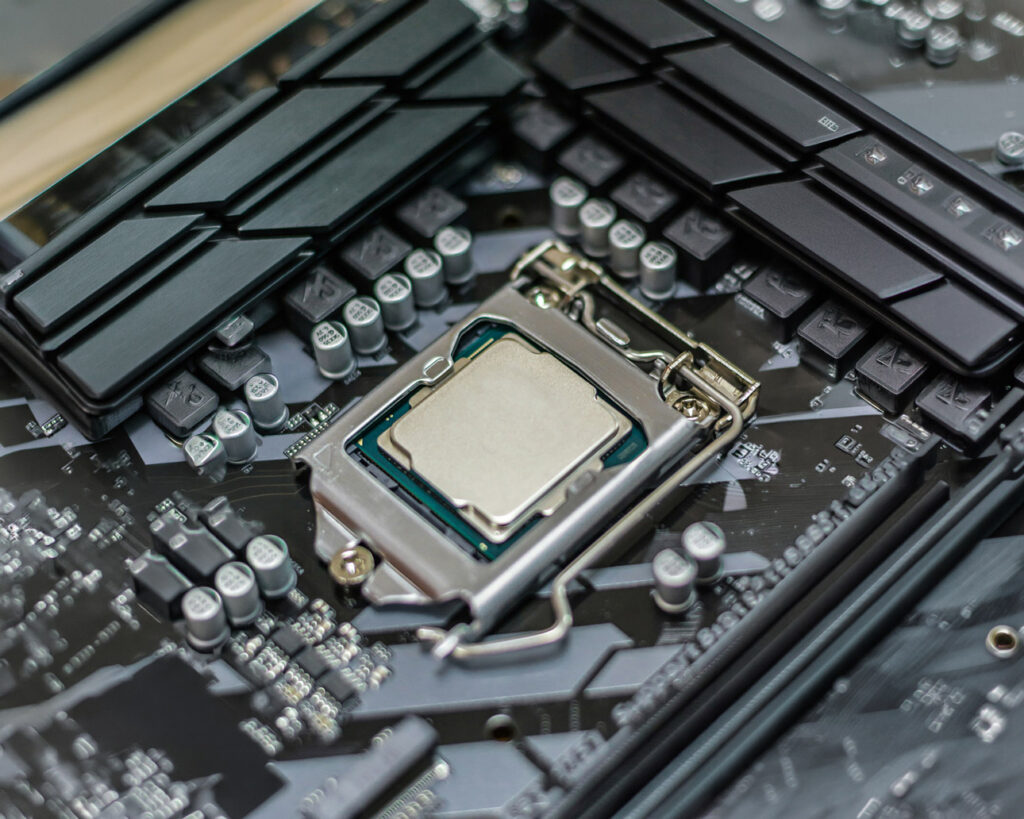
Metal Core PCBs, also known as MCPCBs, use a metal core in place of conventional FR4. A thin thermal interface material (TIM) sits on top of the metal core, with a copper conductor layer positioned above the TIM.
The metal core is designed to redirect heat away from components and improve heat dissipation. It consists of a metal plate of a specified thickness, providing an effective thermal management solution for applications where heat needs to be transferred away from critical components.
Metal Core PCBs are commonly used in LED lighting applications.
Coin PCB
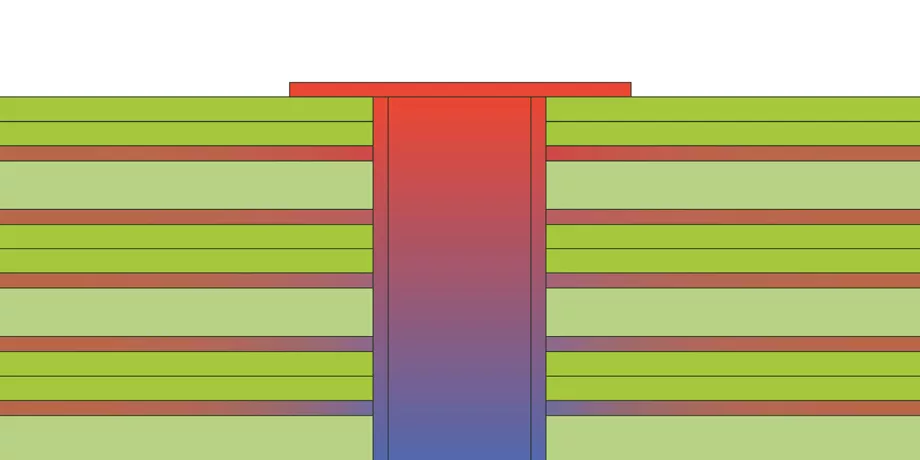
Coin PCB technology is used in designs where localised areas of high heat are present on the printed circuit board. A solid metal coin, typically copper, is pressed into a cavity within the PCB to provide localised thermal management.
There are three main derivatives of the copper coin, named according to their shape: I-coin, T-coin and U-coin, with I-coin and T-coin being the most commonly used.
If the coin is pressed into the PCB before the plating process, connectivity is limited to the top and bottom layers. If it is pressed after the PCB plating process, connectivity to inner layers can be achieved where required.
Typical applications for Coin PCBs include servers for 5G networks, automotive electronics and compact high-power batteries.
Heavy Copper PCB
Heavy Copper PCBs use increased copper weights to support greater heat dissipation and current-carrying capacity without necessarily requiring copper coin technology or similar thermal management solutions.
Copper weights of 2 oz and above are generally considered heavy copper, while certain high-power PCB applications can require copper weights of 12 oz or more.
Due to the increased copper weight, the minimum feature sizes that can be achieved are larger than in PCB designs using copper weights below 2 oz. This needs to be considered during PCB design because of the nature of the etching process.
The increased copper thickness provides significantly greater current-carrying capacity, making Heavy Copper PCBs particularly suitable for high-power applications where both electrical and thermal performance are important.
Find the Right Solution for Your Application
Every application has its own technical, performance and production requirements. Our experts can help you identify the most suitable technology, materials and configuration for your project.